

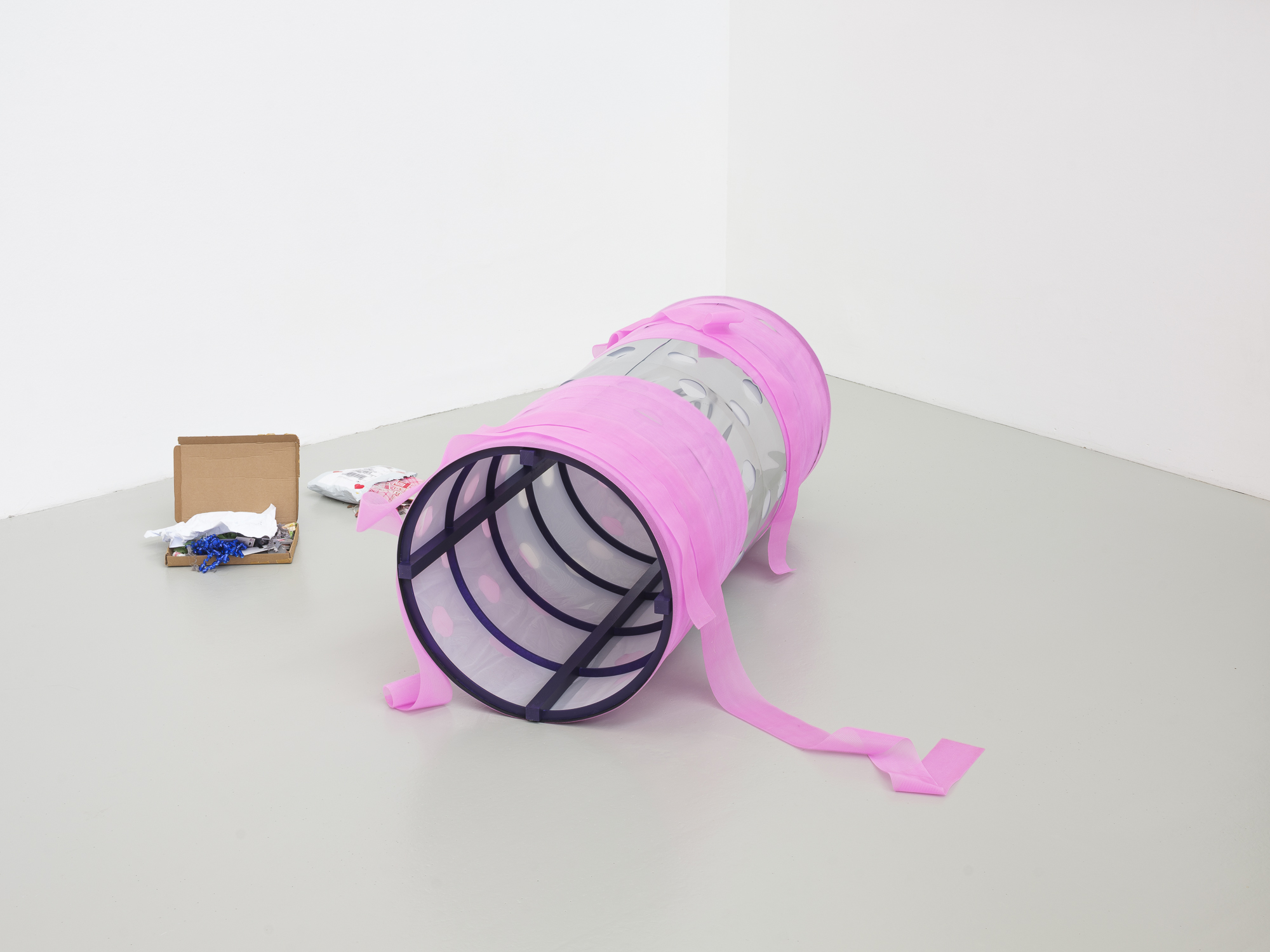
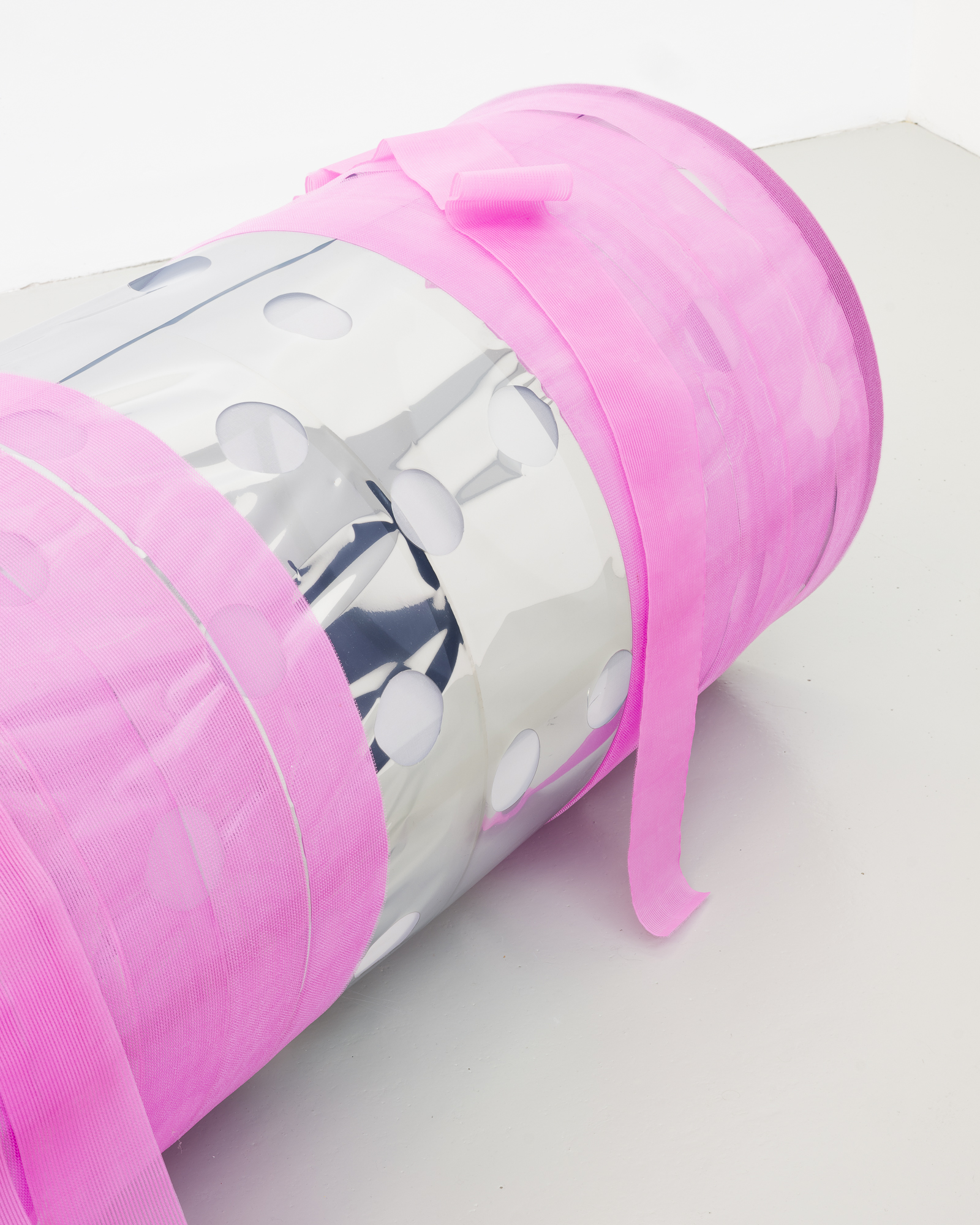
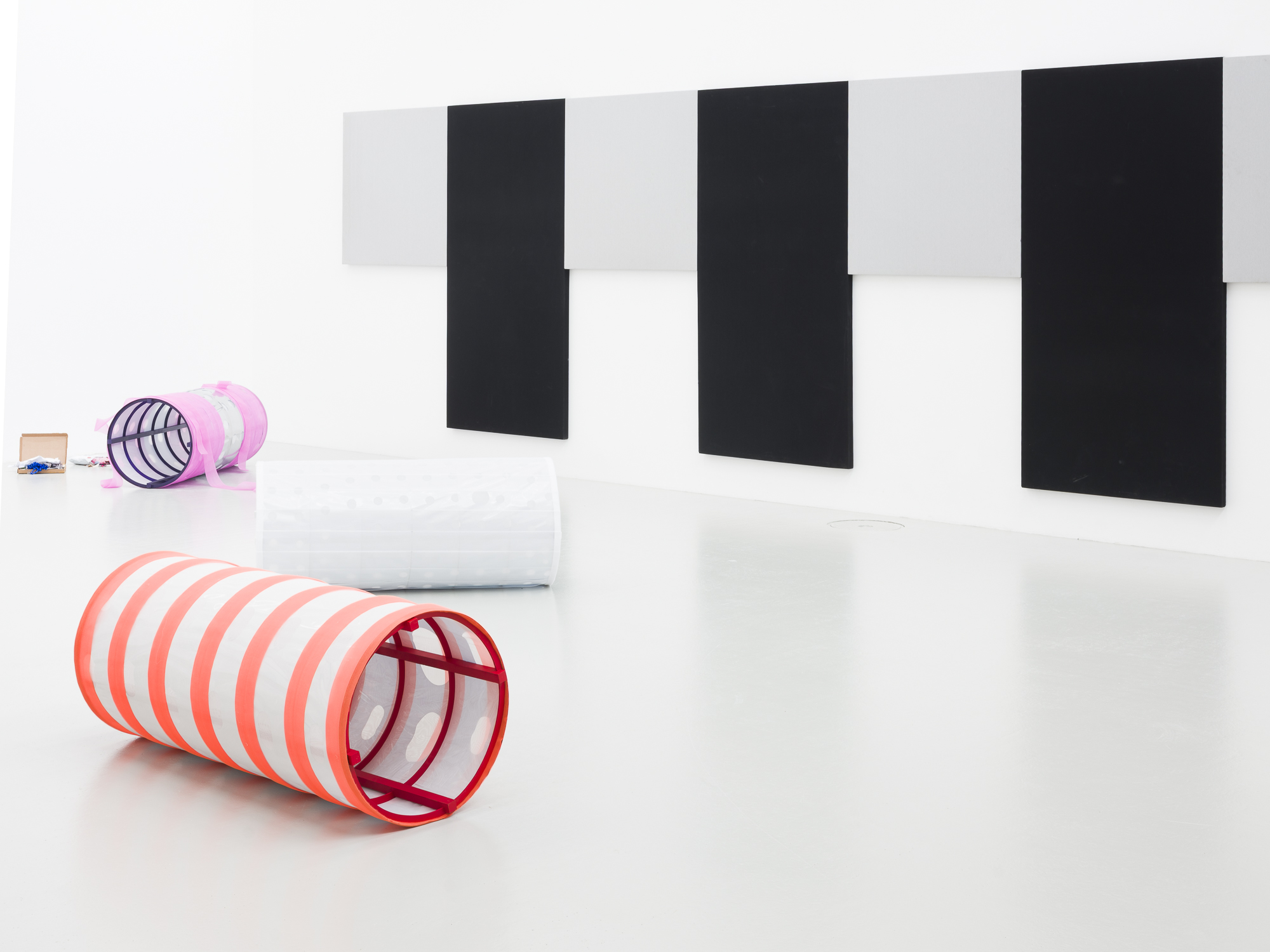
Bigoudis, 2025
Wood, Velcro, foil, fabric and paper
Ø 60 × 140 cm each
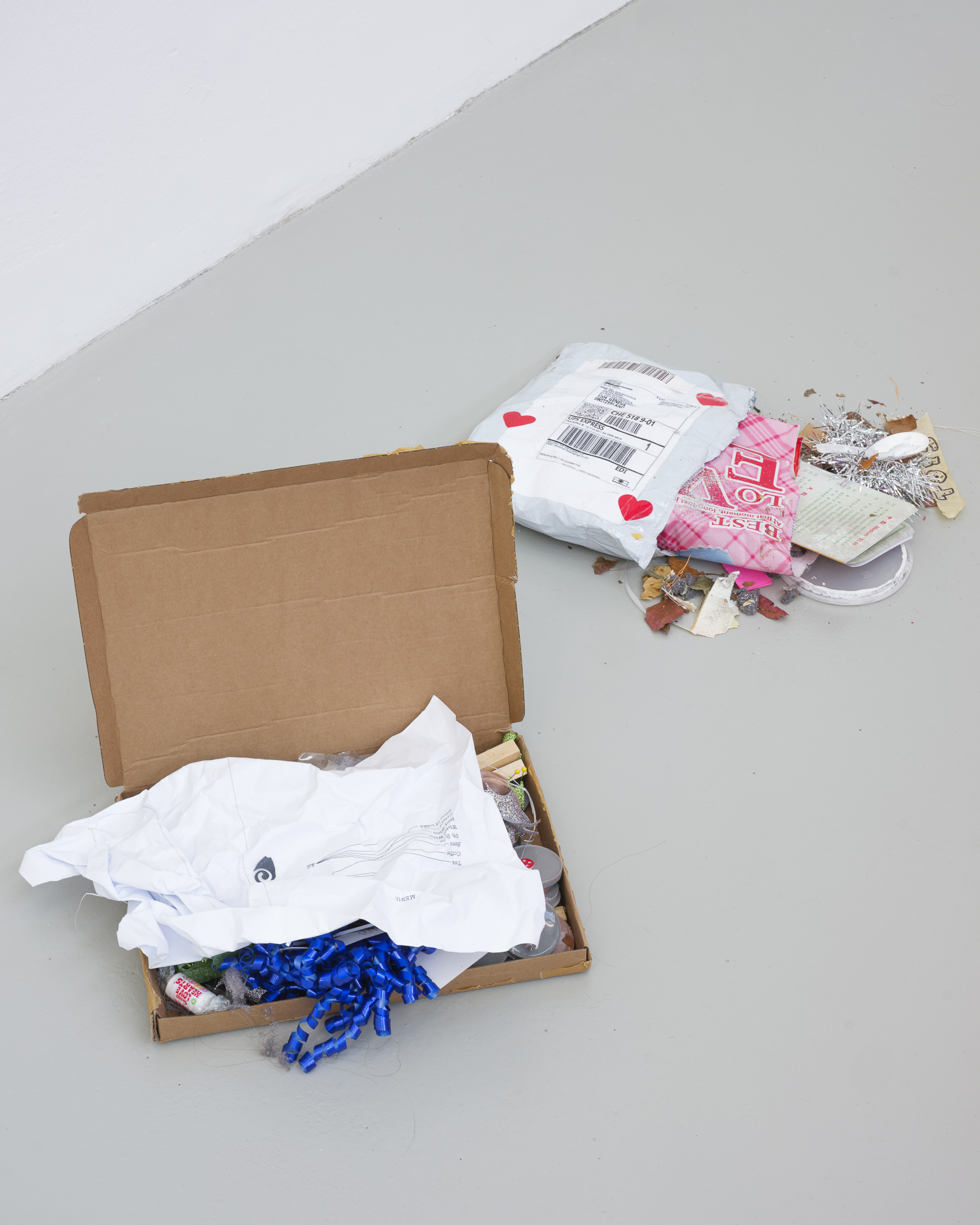
M like Maggie Lee, 2025
Residues from the artist’s studio
Dimensions variable
M like Marlie Mul, 2025
Residues from the artist’s studio
Dimensions variable
If you look closely, it is not hard to find the sarcasm that systemically sustains much of corporate culture. Simply swivel your proverbial chair and look around: that ping-pong table and macchiato bar are not there for employ.ees’ wellness. What flows through most companies’ veins is not staff well-being but a slick sludge of shareholder profit, maximised revenue, and market growth–all sustained by a fragile shell of design optimised for high productivity.
The modus operandi is to make the mood just comfort.able yet oppressive enough so that one forgets the veiled cynicism of such systems and eases into the daily numbness. Snug furniture, drab architecture, well-stocked vending machines–all are colour, texture, and language working together to cultivate a workforce with a heightened sense of denial. Success, then, is defined by how much one can surrender mind and body to professionalised control.
“Wake up, you need to sleep to shine your brightest light.”
reads the upholstery of Untitled (Sleep) (2023), a modified lounge sculpture-chair by Clara Roumégoux (based in Geneva). The highly suggestive quote draws us deeper into the artist’s concerns. But why, after all, does this ergonomic contraption interrupt our slumber only to advise us to sleep some more? This piece of seemingly functional furniture can be traced back to a lexicon Roumégoux has been con.structing in recent years. This informal catalogue, composed of diverse sources, gathers snippets of contemporary work.ing life–objects, architecture, gestures, language; utilitarian references that serve as the foundation for a multidiscipli.nary practice dedicated to uncovering the bittersweet irony in the minutiae we take for granted.
Roumégoux is particularly attuned to environments where one must remain compliant, orderly, and subdued within a system of social formatting. It is precisely these contexts–where individuality is forcefully bent to fit the terms and conditions of big-scale enterprise–that the artist seeks to recreate and remodel under a critical lens. The installations are made to look slightly askew, retaining many of their original features yet operating in a liminal space, subtly contaminating the surrounding architecture. Camou.flaging themselves as common they are, in fact, exercises in undermining triviality. To fully engage with such a prac.tice, an attentive gaze and a sense of investigative curios.ity are therefore required.
For Plattform25, Roumégoux, by recreating three human-sized hair rollers with matching boxes, has unfolded an alternative dimension of domesticity and performative beauty.
Diogo Pinto